
Differences between Tequila and Mezcal
- Oct 1, 2025
- 2 min read

Although mezcal and tequila share roots in agave and Mexican culture, their paths around the world have been very different, especially in terms of production volume, commercial impact, and production methods.
Key differences
1. Production and market size
Tequila is an industrial giant. In 2024, Mexico produced more than 600 million liters of tequila, almost 90% of which was exported, mainly to the United States. Major brands control the global market, and production is highly mechanized.
In contrast, mezcal remains a much smaller, artisanal beverage. In the same year, around 14 million liters of mezcal were produced, of which about 80% was also exported, but with a focus on artisanal, exclusive, and diverse production. According to official government figures, although it is known that there is much unregistered production, the difference is that mezcal continues to be produced, for the most part, artisanally, by small producers who take care of every detail of the process.
2. Diversity of agaves
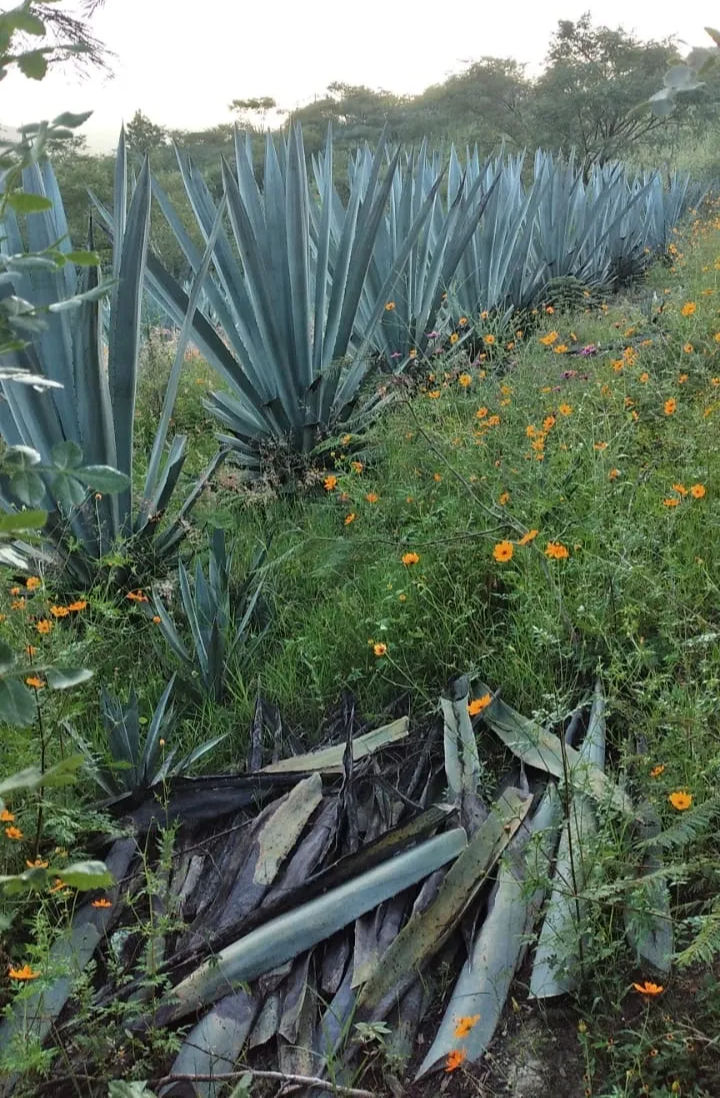
Tequila can only be made with one variety: the Agave Tequilana Weber blue variety.
Mezcal, on the other hand, can be made with more than 40 different species of agave, resulting in a much broader and more complex range of flavors, thanks to the way agaves are cultivated and harvested from the wild.
Regarding production regions, tequila can only be legally produced in five states, with Jalisco being the largest. Mezcal has a designation of origin that encompasses nine states, with Oaxaca as its heartland.
3. Form of production
While most tequila is produced in industrial factories with autoclave ovens and accelerated processes, traditional mezcal is still cooked in conical stone ovens, fermented in open vats, and often distilled in copper or clay stills.
Regarding official regulations, tequila is governed by NOM-006-SCFI-2012, while mezcal is regulated by NOM-070-SCFI-2016, which also classifies mezcal into three types: mezcal (industrial), artisanal mezcal (distilled), and
in a copper still) and ancestral mezcal (distilled in clay pots), the latter two categories being those that preserve traditional and manual processes.
Tequila is the global ambassador of Mexican spirits, but mezcal represents the diversity, history, and soul of the agave. One is volume, the other is expression. Both have their place in culture, but if you're looking for complexity, tradition, and character, mezcal offers a world to explore.
Come and try and taste our different mezcal and tequila offerings. Schedule a tasting and learn more about Mexican culture.

Comments